
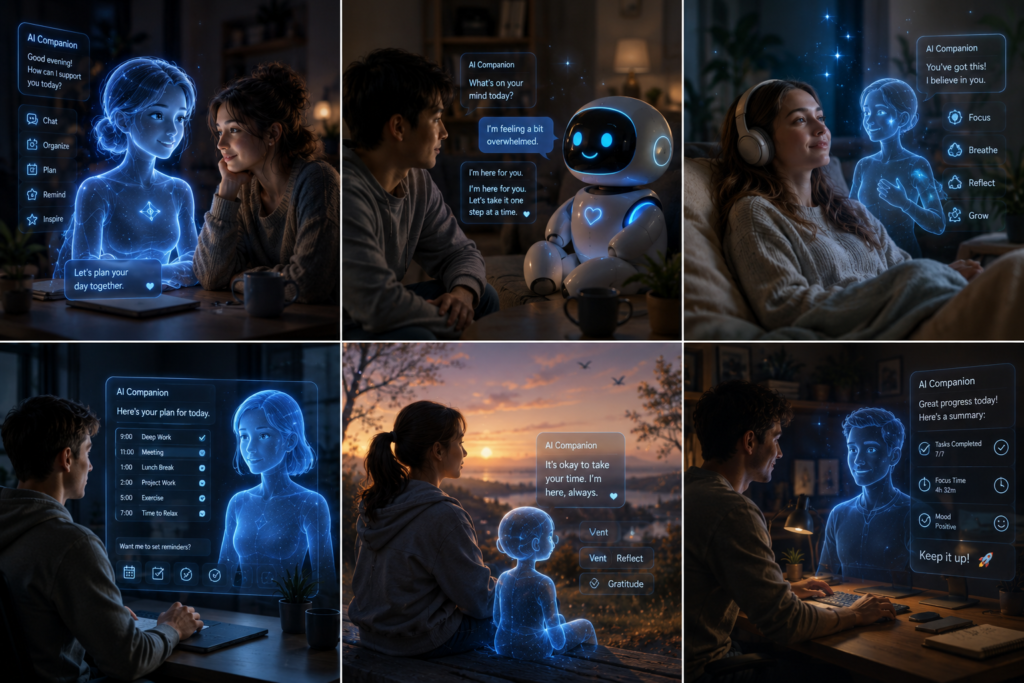
Technology has changed the way people communicate, work, learn, and spend their free time. Over the last decade, artificial intelligence has moved beyond simple automation and entered everyday conversations. What once existed only in science fiction now appears in messaging apps, smart devices, virtual assistants, and digital companion platforms.
From Command-Based Systems to Meaningful Conversations
Early artificial intelligence systems operated through fixed commands and limited responses. Users could ask basic questions, but conversations often felt mechanical and repetitive. The technology lacked context, emotional awareness, and adaptability.
Today’s AI companions function very differently. Natural language processing allows these systems to interpret user intent more accurately and generate responses that feel conversational. As a result, interactions are becoming smoother and more engaging.
Research published by industry analysts suggests that conversational AI adoption continues to grow across consumer and business applications. Millions of users now interact with AI-powered chat systems every day, demonstrating a significant shift in digital communication patterns.
This progress has encouraged developers to focus not only on technical performance but also on creating experiences that feel personalized and relevant to individual users.
Why AI Companions Have Become Part of Daily Routines
Several factors contribute to the growing popularity of AI companions. Increased smartphone usage, improved internet accessibility, and advances in machine learning have made these technologies more accessible than ever before.
Many users turn to AI companions for casual conversations during breaks, while others use them to organize schedules, brainstorm ideas, or receive recommendations. Similarly, students often use conversational AI to support learning activities and practice new concepts.
The appeal lies in availability. Unlike traditional communication channels, AI companions can respond instantly at any time of the day. This continuous accessibility creates a sense of convenience that aligns with modern lifestyles.
Consequently, many people now consider AI interaction a normal part of their digital routine rather than a novelty.
Personalization Is Reshaping User Expectations
One of the most significant developments in recent years involves personalization. Modern AI systems can adapt to user preferences, communication styles, and recurring interests.
This adaptability creates more engaging interactions because responses become increasingly relevant over time. In comparison to earlier chatbot generations, current AI companions are capable of maintaining context across conversations, leading to more natural exchanges.
Platforms such as Xchar AI demonstrate how personalization has become a central feature of companion-focused technology. Users increasingly expect digital interactions that reflect their interests rather than generic responses.
Not only does personalization improve engagement, but it also strengthens long-term user satisfaction. People tend to return to experiences that feel tailored to their needs and preferences.
Digital Companionship in an Always-Connected World
Modern society spends a considerable amount of time online. Social networks, streaming platforms, and messaging applications dominate daily digital activity. AI companions naturally fit into this environment because they provide interactive experiences whenever users seek engagement.
For some individuals, digital companionship serves as a form of entertainment. Others appreciate the ability to discuss hobbies, interests, and creative ideas without scheduling a conversation with another person.
Although AI companions cannot replace human relationships, they can complement existing communication habits. Their role often centers on accessibility, convenience, and consistent interaction.
A recent survey conducted within the artificial intelligence sector indicated growing interest in companion-based applications, particularly among younger digital audiences. This trend highlights how user expectations continue to evolve alongside technological advancements.
New Forms of Creativity and Self-Expression
AI companions are influencing creative activities in unexpected ways. Writers, designers, content creators, and hobbyists frequently use AI-assisted tools to generate ideas and refine concepts.
Visual creation has also gained momentum. An adult image generator may be used by creators working within specific digital entertainment segments, demonstrating how AI technologies are expanding creative possibilities across various industries.
Meanwhile, conversational AI contributes to brainstorming sessions, storytelling exercises, and content planning. These capabilities support creativity without requiring extensive technical expertise.
As a result, users can experiment with concepts more efficiently and transform ideas into finished projects faster than before.
How Emotional Intelligence Is Improving Interactions
Developers increasingly focus on emotional awareness when building AI companions. While artificial intelligence does not possess genuine emotions, advanced models can identify conversational cues and adjust responses accordingly.
This capability creates interactions that feel more thoughtful and contextually appropriate. Especially in casual conversations, emotional responsiveness can make digital communication feel less robotic.
Likewise, systems trained to recognize tone and sentiment often provide responses that align more closely with user expectations. This creates smoother interactions and reduces communication friction.
Xchar AI reflects this industry movement toward richer conversational experiences, where engagement extends beyond simple question-and-answer exchanges.
The Growing Popularity of Relationship-Oriented AI Experiences
Relationship-focused applications represent one of the fastest-growing segments within the companion AI market. Many users seek interactive experiences that feel personalized and conversational.
An AI girlfriend can provide a customized communication experience centered around ongoing interaction, shared interests, and virtual companionship. The appeal often comes from personalization and continuous availability rather than traditional social networking features.
However, user expectations continue to evolve. Developers are working to create systems that balance entertainment value with realistic conversational quality.
Despite differing opinions about digital relationships, market growth suggests that interest in companion-focused experiences remains strong across multiple regions.
Business Innovation Driven by Companion Technology
The influence of AI companions extends beyond consumer applications. Businesses are adopting similar technologies to improve customer support, onboarding processes, and user engagement.
Conversational interfaces now assist with product recommendations, service inquiries, and educational resources. In the same way, personalized interaction models originally developed for companion platforms are being adapted for commercial use.
Companies recognize that users increasingly prefer conversational experiences over traditional menus and static interfaces. Consequently, investment in conversational AI continues to increase across industries.
Xchar AI represents part of a broader movement where conversational intelligence shapes the future of digital interaction and engagement.
What Research Reveals About Future Adoption
Industry forecasts indicate continued growth in artificial intelligence adoption worldwide. Analysts predict that conversational AI markets will expand significantly throughout the coming years as technology becomes more sophisticated and accessible.
The progression illustrated above highlights how AI companions have evolved from simple response systems into sophisticated conversational experiences.
Subsequently, future developments may focus on improved memory systems, enhanced personalization, multimodal communication, and deeper contextual awareness.
Xchar AI and similar platforms are expected to benefit from these advancements as user demand for richer interactions continues to grow.
Looking Ahead at the Next Generation of AI Companions
The future of AI companions appears closely connected to broader advances in artificial intelligence. Improved language models, better contextual memory, and more sophisticated interaction design are likely to shape upcoming innovations.
Consumers increasingly expect technology to adapt to their preferences, communicate naturally, and provide meaningful interactions. Therefore, developers continue investing in systems capable of delivering these experiences.
Although challenges related to privacy, transparency, and responsible development remain important, the overall direction of the industry points toward greater personalization and accessibility.
Also Read :- How to Build a Profitable AI Girlfriend Business Without Starting From Scratch
Conclusion
The transformation of AI companions in everyday life reflects a significant change in how people interact with technology. What began as simple automated systems has developed into highly personalized conversational experiences capable of supporting communication, creativity, entertainment, and digital engagement.
As artificial intelligence continues to advance, AI companions are likely to become even more integrated into daily routines. Their growing presence demonstrates a clear shift toward technology that prioritizes interaction, personalization, and user-centered experiences. While the future will bring new opportunities and challenges, AI companions have already established themselves as an important part of the modern digital world.

I am Hammad a blogger who loves writing useful and honest content. ✍️I enjoy turning information into easy-to-read stories. Through my blog I aim to help, inform, and connect with readers. 🤝
I know highly information about celebrities
